Field Notes: Workflow Principles
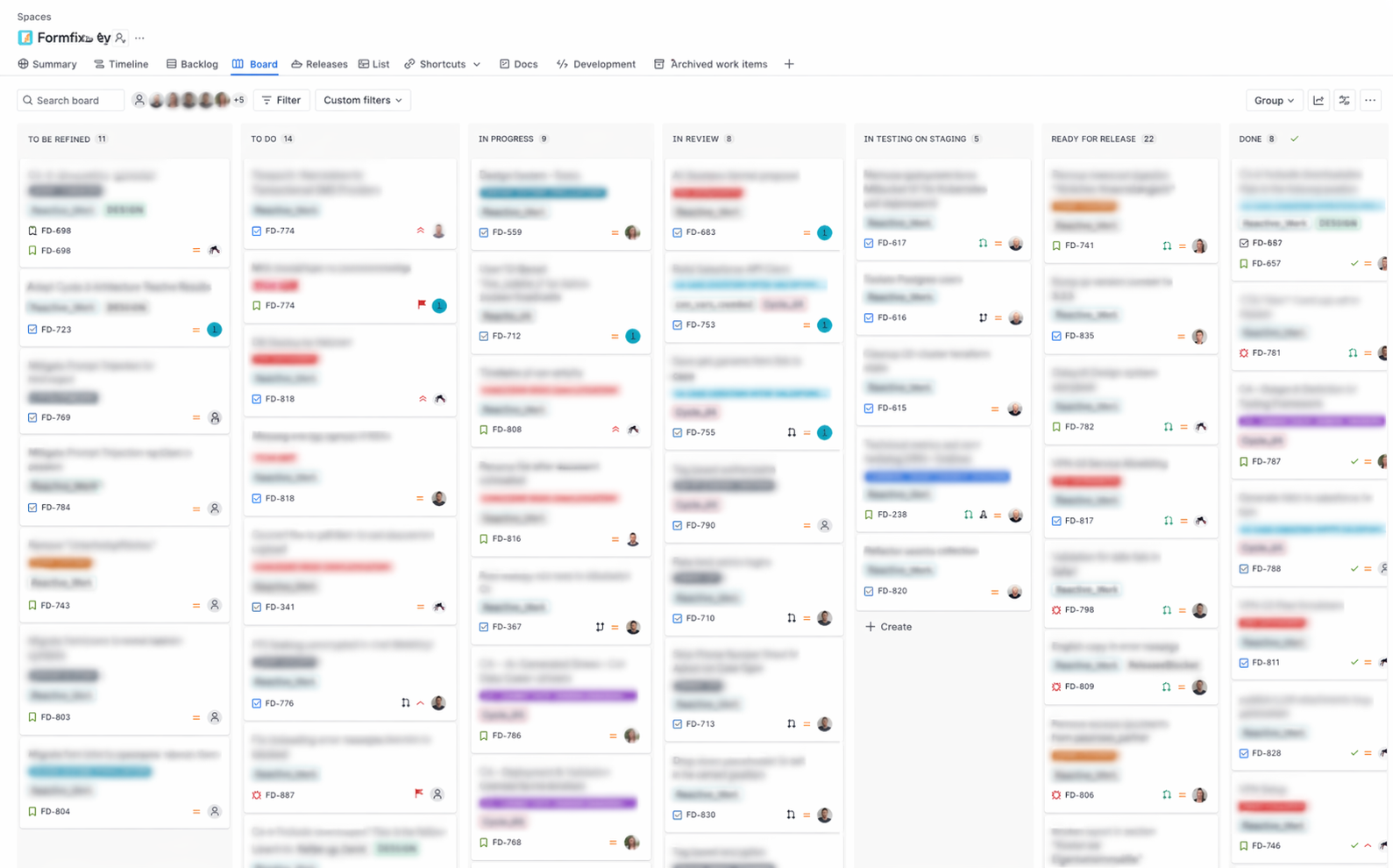
Developers and designers each had four tickets in progress at the same time - and by “in progress,” I mean actually in progress: including tickets in review and tickets in testing.
That’s a direct violation of one of the most basic Kanban principles: limit work in progress.
The symptom is always the same. The board looks busy. Nothing ships. Everyone is “almost done” with something. Standups turn into a list of things waiting on someone else.
So we wrote down the principles the team should work by - optimized for flow and outcomes, not activity.
End-to-end ownership 
Every ticket has one clear owner who is responsible for driving it from start to Ready for Release. Ownership does not end with development.
Finish over start 
We prioritize finishing work over starting new work. A ticket is only considered done when it is releasable.
Limit work in progress (WIP) 
We keep the number of active tickets per person low to ensure focus, fast feedback, and high quality.
WIP is everything that is not “Ready for Release” 
Any ticket that is not yet ready for release counts as work in progress - including tickets in development, review, or testing.
No passive waiting 
If a ticket depends on others (e.g. review or testing), the owner actively drives progress by following up, coordinating, or collaborating.
Shared responsibility, clear accountability 
While review and testing involve multiple people, the owner remains accountable for moving the ticket forward.
Fast feedback loops 
Code reviews and testing are treated as high priority to avoid delays and keep work flowing.
Transparency over status 
The board reflects the real state of work. There is no hidden or “invisible” progress.